
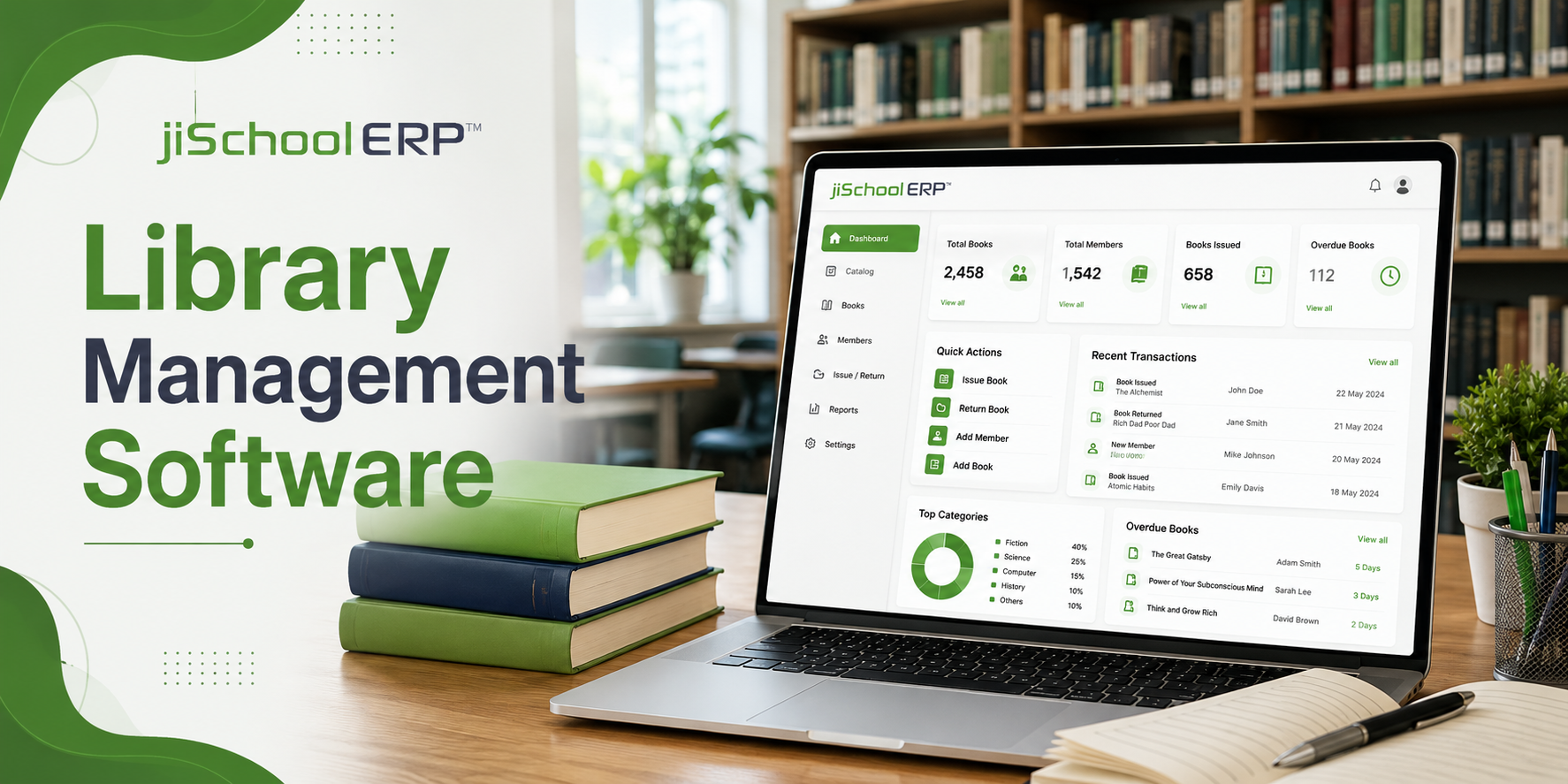
In today’s digital education environment, schools are rapidly adopting smart technologies to improve academic operations and student engagement. One of the most important areas that has undergone significant transformation is the school library. Traditionally, libraries relied on manual registers, paper records, and time-consuming administrative processes. However, modern educational institutions now understand the importance of digital systems in improving accessibility, organization, and student learning outcomes.
A well-structured Library Management Software helps schools create a smarter, more efficient, and student-friendly learning environment. Libraries are no longer limited to storing books; they have become interactive learning centers that support research, creativity, collaboration, and digital education. With the help of advanced software solutions, schools can simplify library operations, improve book accessibility, encourage reading habits, and provide students with a seamless learning experience.
This blog explains in detail how a modern Library Management Solution contributes to better education, streamlined library operations, and improved academic performance.
Key Takeaways
- Library Management Software simplifies library operations and improves resource accessibility for students and staff.
- A modern library management module enhances student learning through digital access, research support, and organized resources.
- Efficient management of school libraries helps educational institutions save time, reduce manual work, and improve productivity.
- A smart Library Management Solution encourages reading habits, independent learning, and better academic engagement among students.
- jiSchoolERP provides advanced library management solutions that help schools create modern, efficient, and student-friendly libraries.
Understanding Library Management Software
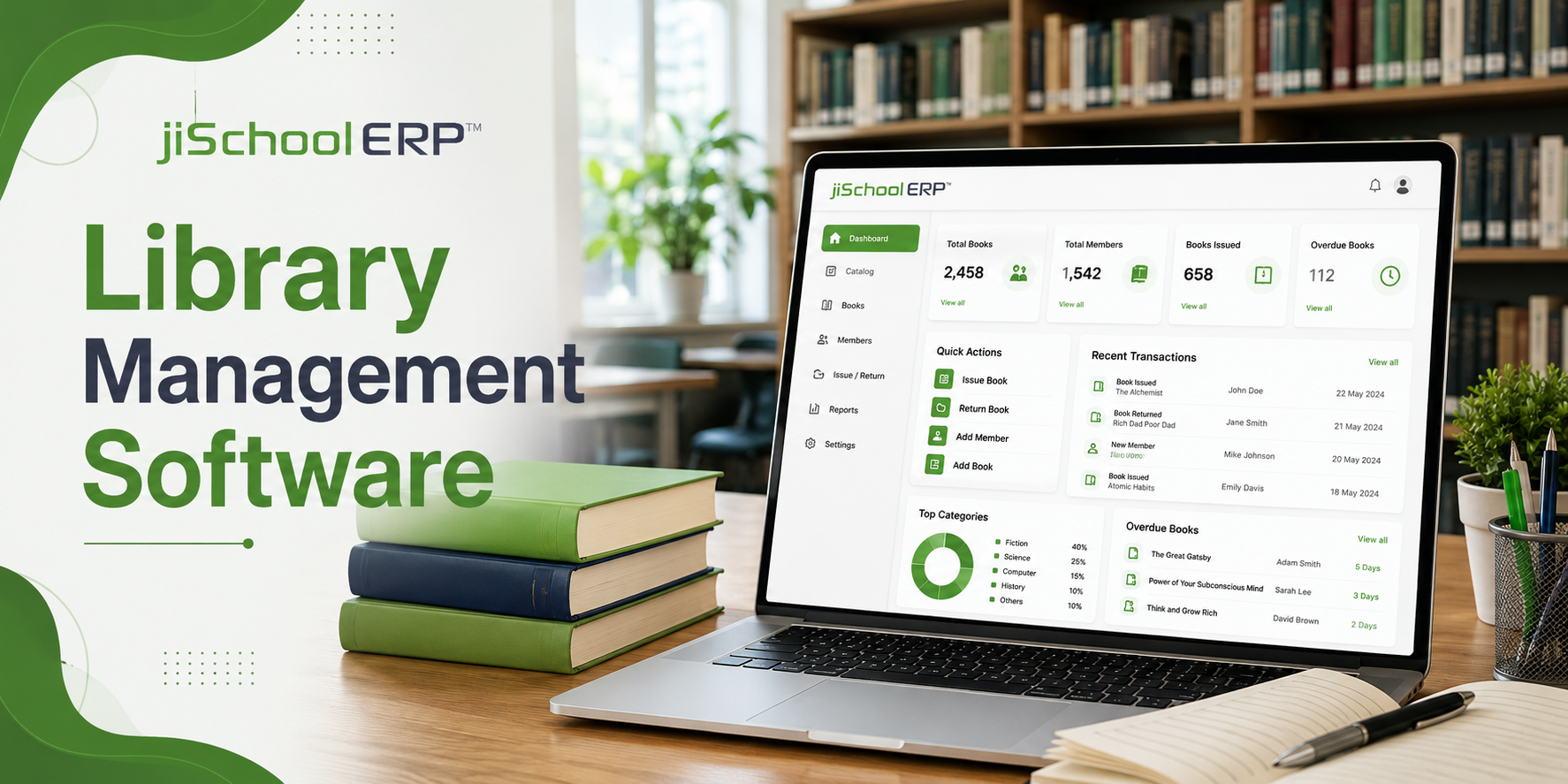
Library Management Software is a digital system designed to automate and manage all library-related activities within schools, colleges, and educational institutions. It helps librarians efficiently handle book records, student memberships, book issuing and returning, inventory tracking, overdue notifications, reporting, and much more.
Instead of maintaining large manual registers and physical records, schools can use software to centralize all library operations in one secure platform. A modern library management module typically includes:
- Book catalog management
- Barcode integration
- Student and staff records
- Book issue and return tracking
- Fine calculation
- Search and filter options
- Digital resource management
- Real-time reporting
- Inventory monitoring
- Online access for students and teachers
These features significantly improve the efficiency and accessibility of school libraries.
The Growing Importance of Digital Libraries in Education
The role of libraries in education has evolved tremendously over the years. Modern students require faster access to educational materials, digital content, research tools, and collaborative learning resources. Schools must therefore create libraries that align with current technological advancements and learning patterns.
Traditional library systems often create challenges such as:
- Difficulty locating books
- Time-consuming manual entries
- Inaccurate inventory records
- Delayed issue and return processes
- Limited access to digital resources
- Poor tracking of overdue books
- Administrative workload for librarians
A robust Library Management Solution eliminates these challenges by automating repetitive tasks and improving resource accessibility for students and staff. Digital library systems also support self-learning, research-based education, and academic independence among students.
How Library Management Software Enhances Student Learning Experience
1. Easy Access to Learning Resources
One of the biggest advantages of Library Management Software is that it allows students to quickly search and access books, journals, research materials, and digital content. Students can easily:
- Search books by title, author, category, or ISBN
- Check book availability instantly
- Reserve books online
- Access digital learning materials
- Explore recommended reading lists
This saves time and encourages students to use library resources more frequently. When students can quickly find the information they need, they become more engaged in learning and academic research.
2. Encourages Reading Habits Among Students
Reading plays a major role in intellectual growth, vocabulary development, creativity, and critical thinking. However, students often lose interest in traditional library systems due to inconvenience or lack of accessibility.
An advanced library management module makes libraries more interactive and user-friendly. Students can browse books digitally, receive personalized recommendations, and access reading materials without confusion. Features such as:
- New arrival notifications
- Popular book recommendations
- Genre-based categorization
- Digital reading history
- Reading activity tracking
help schools encourage regular reading habits among students.
When students interact more with the library, they naturally improve their knowledge, communication skills, and academic performance.
3. Improves Research and Self-Learning
Modern education emphasizes self-learning and research-oriented study methods. Students are expected to explore topics independently, analyze information, and develop critical thinking skills.
A powerful Library Management Solution supports this educational approach by providing organized access to academic resources. Students can:
- Explore multiple references for assignments
- Access research journals and eBooks
- Find study materials instantly
- Use digital databases for projects
- Improve independent learning capabilities
By reducing dependency on manual assistance, students become more confident learners.
4. Saves Valuable Time for Students and Librarians
Traditional library systems often involve long queues, manual record maintenance, and slow book issue processes. These delays can discourage students from using the library regularly.
With Library Management Software, all operations become faster and more efficient. The software automates:
- Book issuing and returns
- Student verification
- Fine calculations
- Due date tracking
- Inventory updates
- Book availability checks
This reduces administrative workload and allows librarians to focus more on helping students rather than managing paperwork.
Students can spend more time reading and learning instead of waiting for manual processes.
5. Better Organization of Library Resources
Managing thousands of books manually can become extremely difficult for schools. Misplaced books, duplicate entries, and inventory errors often create confusion.
An efficient library management module helps organize all library resources systematically. Libraries can categorize books based on:
- Subjects
- Classes
- Authors
- Genres
- Academic levels
- Publication dates
Advanced search and filtering options also help students locate resources quickly. Well-organized libraries create a better learning environment and improve overall student satisfaction.
6. Supports Digital Learning and eBooks
The education industry is rapidly shifting toward digital learning. Students today prefer accessing educational content online through laptops, tablets, and smartphones.
Modern Library Management Software supports:
- eBooks
- PDFs
- Digital journals
- Online learning materials
- Multimedia educational content
This allows students to continue learning anytime and anywhere.
Digital accessibility is especially beneficial for:
- Remote learning
- Hybrid education models
- Exam preparation
- Research projects
- Distance education programs
Schools that adopt digital library systems provide students with a more flexible and modern learning experience.
7. Real-Time Notifications and Alerts
Students often forget due dates, resulting in penalties or delays for other students waiting for the same books.
A smart Library Management Solution sends automated notifications for:
- Book due dates
- Overdue reminders
- Reserved book availability
- Membership renewals
- New arrivals in the library
These alerts improve accountability and ensure smoother library operations. Automated communication also improves student engagement with library resources.
8. Enhances Accuracy and Reduces Human Errors
Manual data entry increases the chances of:
- Lost records
- Incorrect inventory counts
- Mismanaged transactions
- Duplicate entries
A digital library management module minimizes these errors through automation and centralized record management. Barcode integration and automated tracking improve transaction accuracy and maintain reliable records.
Accurate data helps schools make better decisions regarding book purchases, inventory planning, and student reading trends.
9. Personalized Learning Experience for Students
Every student has different interests, reading levels, and learning requirements. A modern Library Management Software can help schools provide personalized learning experiences.
The software can track:
- Student reading patterns
- Frequently borrowed books
- Subject preferences
- Reading history
This information helps schools recommend relevant books and learning materials to students. Personalized recommendations encourage continuous learning and improve academic engagement.
10. Improves Collaboration Between Teachers and Students
Libraries are not only for reading books; they also support collaborative learning activities.
Teachers can use a digital Library Management Solution to:
- Recommend books for assignments
- Share reading materials
- Create subject-specific reading lists
- Monitor student reading activity
Students can access these materials easily and improve classroom participation.
This creates stronger collaboration between teachers, students, and librarians.
Features Every School Should Look for in a Library Management Solution
A modern library system should include advanced features that improve efficiency, accessibility, resource management, and the overall learning experience for students, teachers, and librarians.
User-Friendly Interface
A simple and easy-to-use interface helps librarians, teachers, and students operate the system without technical difficulties. Quick navigation, organized dashboards, and easy search options improve user experience and encourage students to access library resources more frequently and efficiently.
Barcode and RFID Integration
Barcode and RFID integration simplifies book issuing, returning, and inventory tracking processes. These technologies reduce manual errors, improve transaction speed, help librarians manage large collections efficiently, and ensure accurate tracking of books, student records, and library assets.
Online Catalog Access
Online catalog access allows students and teachers to search books, journals, and study materials anytime from any device. This feature improves accessibility, saves time, supports remote learning, and enables users to check book availability without physically visiting the library.
Automated Notifications
Automated notifications help students and staff stay updated about due dates, overdue books, membership renewals, reserved books, and new arrivals. This feature improves communication, reduces delays, minimizes fines, and ensures smoother and more organized library operations.
Multi-User Access
A modern library system should support multiple users simultaneously, including librarians, students, teachers, and administrators. Multi-user access improves collaboration, allows real-time updates, enhances operational efficiency, and ensures seamless management of daily library activities.
Digital Resource Management
Digital resource management enables schools to organize and provide access to eBooks, PDFs, online journals, research papers, and multimedia learning content. This feature supports digital education, remote learning, and modern teaching methods while improving student accessibility to knowledge resources.
Reporting and Analytics
Reporting and analytics features help schools track library performance, book circulation, student reading habits, overdue records, and inventory usage. Detailed reports provide valuable insights that help administrators make informed decisions for improving library services and resource planning.
Secure Data Management
Secure data management protects sensitive student records, library transactions, and digital resources from unauthorized access or data loss. A reliable system should include secure backups, user authentication, and data protection measures to maintain information accuracy and confidentiality.
Why Schools Need Modern Library Management Systems Today
Educational institutions are becoming increasingly technology-driven. Students expect digital convenience in every aspect of learning, including library access.
Traditional systems are no longer sufficient for managing modern educational libraries. A modern library management module helps schools:
- Create smart libraries
- Support digital education
- Improve learning accessibility
- Enhance operational efficiency
- Encourage independent learning
- Build student engagement
As educational competition continues to grow, schools must invest in advanced technologies that improve both academic quality and operational management.
Conclusion
Libraries continue to play a vital role in student education, research, and academic development. However, traditional library systems often limit efficiency, accessibility, and student engagement. Modern educational institutions need smart digital solutions that simplify operations while improving learning experiences.
An advanced Library Management Software helps schools automate library activities, organize resources efficiently, improve accessibility, encourage reading habits, and support digital learning. From enhancing research capabilities to streamlining administrative tasks, a powerful Library Management Solution creates a smarter and more productive educational environment.
The importance of efficient management of school libraries has never been greater in today’s technology-driven education system. Schools that invest in a modern library management module can significantly improve student satisfaction, academic performance, and operational efficiency.
At jiSchoolERP, we are committed to helping educational institutions transform their libraries into intelligent learning centers through our innovative and scalable solutions. Our advanced library management system empowers schools to deliver better learning experiences, simplify operations, and prepare students for a digitally connected future.
FAQ's
1. How does Library Management Software improve operational efficiency in schools?
Library Management Software automates tasks such as book issuing, returns, catalog management, fine calculations, and inventory tracking. This reduces manual workload, minimizes errors, improves resource organization, and allows librarians to manage school libraries more efficiently and accurately.
2. Why is a library management module important for modern educational institutions?
A library management module helps schools digitize and streamline library operations while improving accessibility to learning resources. It supports faster book searches, digital learning integration, automated tracking, and efficient management of both physical and digital educational materials.
3. Can Library Management Software help schools manage digital learning resources?
Yes, modern Library Management Software supports digital learning resources including eBooks, PDFs, research journals, multimedia content, and online study materials. This helps schools support remote learning, hybrid education models, and technology-driven academic environments effectively.
4. How does Library Management Software improve accessibility for students and teachers?
Library Management Software allows users to search, reserve, and access learning resources online from any device. This improves convenience, saves time, supports flexible learning, and ensures students and teachers can access educational materials whenever required.
5. What security features should schools expect in a library management module?
A secure library management module should include data encryption, user authentication, access controls, and backup systems. These features protect sensitive student information, library records, and digital resources while ensuring data accuracy and system reliability.









Share this post on: